Garden Center POS System Built for Nursery and Plant Retail Operations
Running a garden center means selling perishable plants, bulk soil, seasonal décor, hardscape materials, and fertilizer all from the same checkout. Most generic POS systems weren't built for that mix. Owners Inventory's garden center point of sale system handles it from one platform.
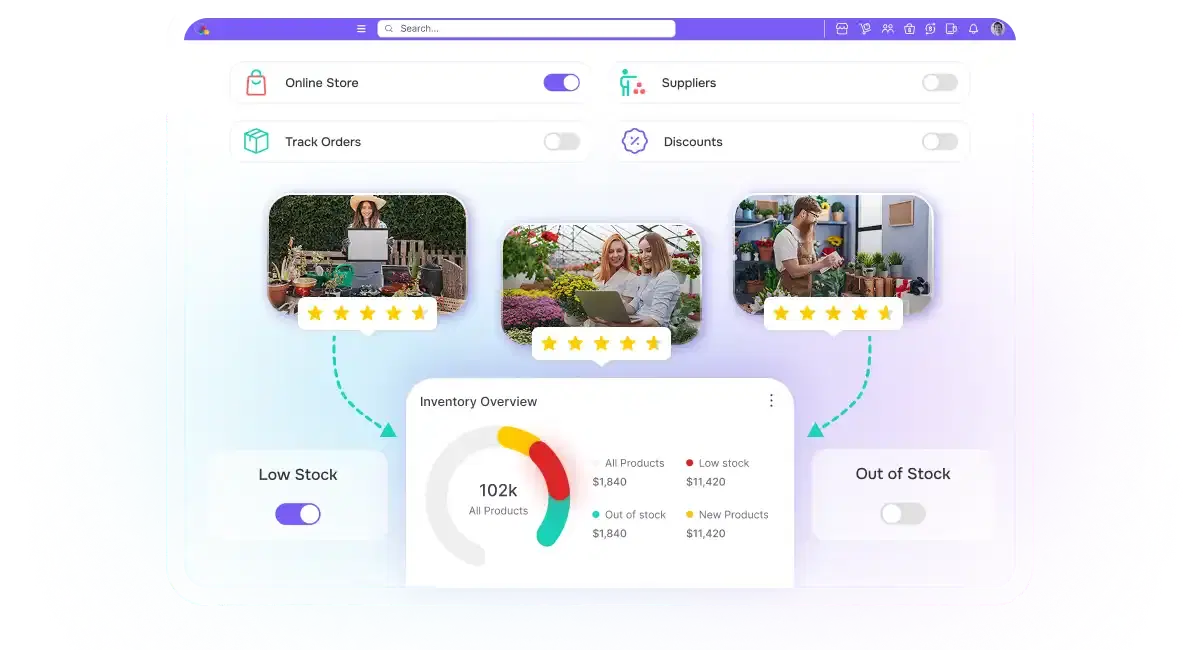
Rated on Leading Review Platforms
Challenges Garden Centers Face
Seasonal demand cycles, perishable inventory, and heavy reliance on supplier relationships makes nursery point of sale operations harder to manage than most retail systems can handle.
Seasonal Inventory Swings
Spring can push a garden center from 400 SKUs to 1,200 in under six weeks, then back down again in fall. Most owners feel that swing in their gut before they see it in a report. Without a way to track it, next year's purchasing decisions will be made from memory instead of data.
Perishable Plants Tracked Like Durable Goods
A flat of annuals that arrives Monday can be unsellable by Friday if it isn't watered or moved indoors. Generic POS systems track a 4" petunia the same way they track a bag of mulch, so write-offs show up at month's end with no record of when or why the loss happened.
Orders Disconnected From Sales
Most garden centers work with four to eight nursery suppliers a season, often ordering by gut feel instead of SKU-level data. Without purchase history tied to sales, you over-order on what didn't move and under-order on what sold out fast.
No Variant Tracking on Plants and Supplies
A tomato plant comes in a 4" pot, a 1-gallon container, and a 3-gallon. Fertilizer comes in four bag sizes. When the system can't separate these variants, stock counts are unreliable and staff end up counting shelves instead of helping customers.
How Owners Inventory Solves Garden Center POS Challenges
Each problem above maps directly to a capability inside the platform. Built for how nurseries and garden centers actually operate, not generic retail.
Seasonal Catalog Management
The product catalog supports bulk CSV import, so you can bring in a full spring catalog in one upload. When the season ends, you archive inactive products without losing their sales history.
Shrinkage Tracking by Product
Stock adjustments let you log damaged or unsellable units with a reason code. Pull adjustment reports by date range and category to see which plant lines carried the most shrinkage and which supplier's deliveries were consistently short.
Sales-Based Purchase Orders
The purchasing module generates purchase orders from inside the same system tracking your sales. Pull a SKU-level movement report, identify what sold fastest in the past 30 days, and send orders to your nursery suppliers without switching tools.
Variant-Level Stock for Plants and Hardscape
Each container size or product variation gets its own SKU and stock count. A 1-gallon Japanese maple and a 5-gallon are tracked separately with independent reorder alerts, so you won't order more 4" pots when you're low on gallons.
Customer Profiles With Purchase History
Every customer gets a profile with their full purchase history. When they come back in spring asking what rose variety they bought two seasons ago, the staff can pull it up at the register.
Key Features of Garden Center POS Software

Variant-Level Inventory Tracking
Plants, supplies, and hardscape items are tracked with full variant support, including container size and species variant. Each variation carries its own SKU, stock count, and low-stock threshold, so purchasing decisions come from variant-level data, not a blended count across sizes.

Bulk Import and Seasonal Catalogs
Spring catalogs often run to hundreds of new SKUs. Bulk CSV import loads an entire supplier catalog in one step. Seasonal deactivation preserves the product record and sales history without cluttering your active catalog.

Purchase Order Management
Your nursery suppliers and hardscape vendors are managed inside the purchases module. Purchase orders are generated from the same interface where you review stock movement. When stock arrives, receiving it against the purchase order updates counts immediately and flags any shortfall.

Real-Time Inventory Sync
Every in-store sale reduces the online count in real time. A customer who buys your last 5-gallon hydrangea at the register won't find it available on your website five minutes later. This applies whether you're selling through Shopify, WooCommerce, or the built-in store.
Staff Access Controls
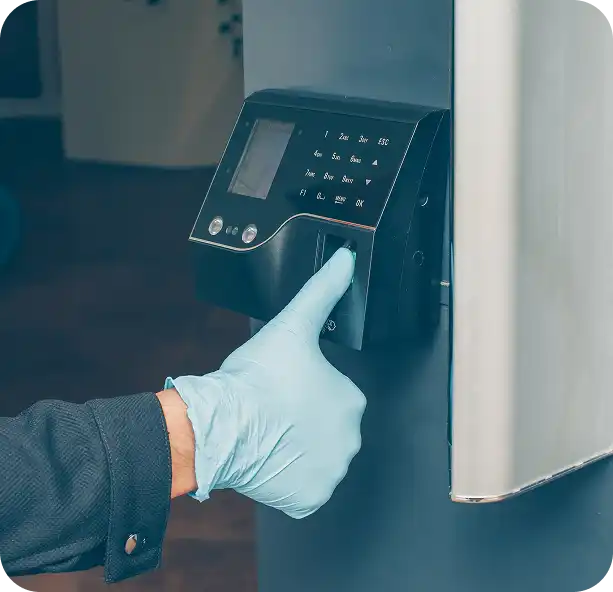
Limit who can process returns, apply discounts, or adjust stock counts. A seasonal hire can ring up sales without being able to mark down a rack of overwintered perennials, and every action is logged to a specific user and timestamp, so you can trace who applied a clearance discount and when.

Shift Reports by Category
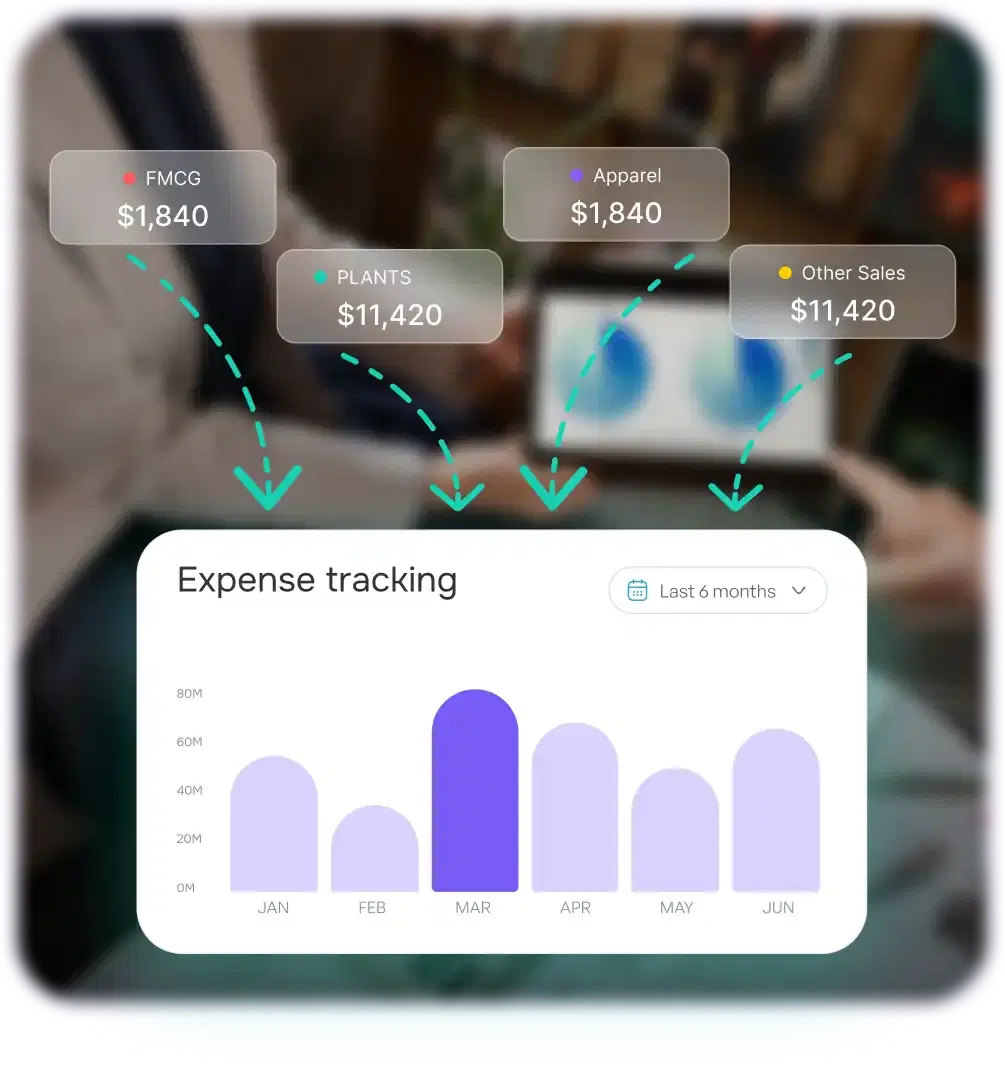
The end-of-day shift report shows revenue by product category, payment type, and staff member. Which departments pulled the most revenue this weekend? It's in the report, not a spreadsheet you have to build yourself.
Omni-Channel Selling for Garden Centers
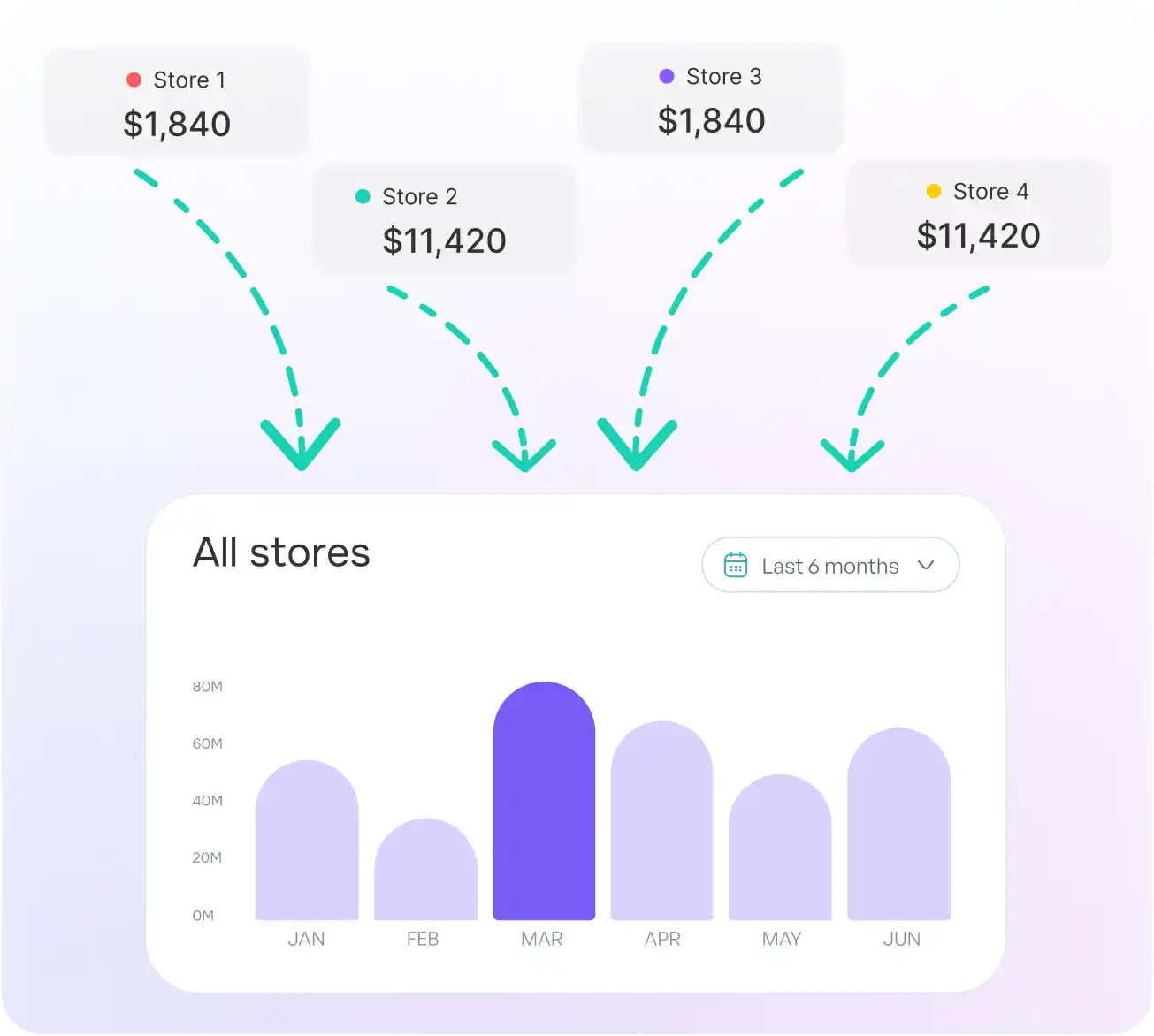
Your garden center point of sale system, online store, and dashboard all run off the same stock numbers, so nothing gets oversold.
Sales and Inventory Reporting for Nursery POS Systems
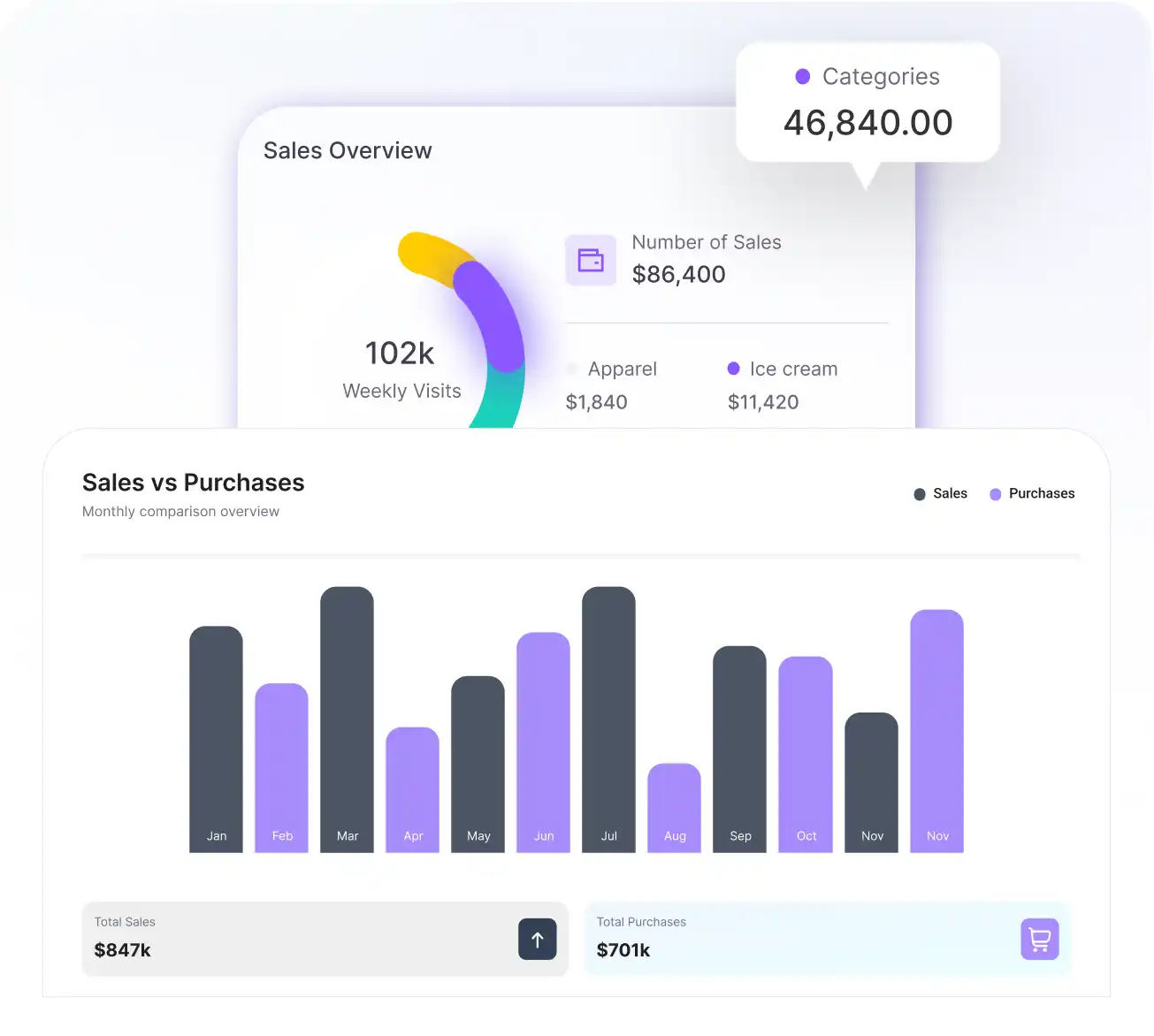
Sales reports show revenue by product category and date range, so you can compare spring performance year over year. Inventory reports track stock movement, including adjustments, received shipments, and transfers between locations. For purchasing, you can see what was ordered from each supplier, at what cost, and whether the delivery matched the invoice. If your 4" annual herbs sold out the first weekend of May three years running, that's in the data before this April's order goes out.
Data Security and Transaction Accuracy
Owners Inventory uses encrypted APIs and a complete activity log where every action is tied to a specific user and timestamp.
Payment processing through Stripe is PCI-compliant, and customer data, including purchase history tied to a specific rose or tomato variety, is accessible only to authorized users. If a refund on a bulk soil order gets processed outside your policy, or a stock adjustment on a pallet of fertilizer goes through without a reason code, the log shows exactly who made the change and when.
Integrations That Connect Your Garden Center

Shopify

WooCommerce

QuickBooks

Xero

Stripe
What Garden Center Owners Say


Rachel Kowalski
Owner, Greenfield Nursery, Columbus OH
"We were placing supplier orders based on what we remembered selling last spring. Switched to Owners Inventory and pulled actual SKU movement reports for the first time. Our overstock on slow-turn perennials dropped by about 30% the first season."


Marcus Obi
Manager, Terracycle Garden Center, Portland OR
"Variant tracking changed how we manage our container inventory. Before, we'd reorder 1-gallon shrubs not realizing we had 40 units of the 3-gallon sitting in the back. Now each size has its own count and its own alert. We haven't had a duplicate overstock issue since we set it up."

Diana Furst
Owner, Sunroot Gardens, Denver CO
"A customer came in asking for the exact heirloom pepper variety she bought from us in 2022. My staff pulled it up in thirty seconds from her profile. She's been back four times this season."

Liam Tran
Owner, Westside Plant House, Sacramento CA
"We added an online store through the platform last year. The inventory sync is the part that actually works. When something sells at the register, the website updates before the next customer can add it to their cart. No more apologetic refund emails."
Don't Let a Stockout Cost You A Peak Weekend
Set up Owners Inventory in a day and run your first shift on accurate data.
Why Garden Centers Choose Owners Inventory
Here's what sets Owners Inventory apart from a generic POS system once you look past the feature list.
Built for Mixed Product Operations
Most generic POS platforms weren't built with perishable, variant-heavy, and bulk product mixes in mind. Garden centers sell perishable plants, bulk materials, hardscape, seasonal decor, and chemical supplies in the same transaction. Owners Inventory handles that mix without workarounds or separate tools for each category.
30-Day Free Trial, No Contract
Start on any plan with a free 30-day trial and cancel at any time.
Multi-Location From the Start
If you run two locations, or a garden center alongside a greenhouse operation, both run from the same account. Stock transfers between sites, shared customer records, and combined reporting are available without a plan upgrade.
Same-Day Setup
Most garden centers complete the initial setup within a few hours. Bulk product import via CSV handles large spring catalogs without manual SKU entry, and variant structures are built from parent product records.
Live Support During Peak Season
All plans include onboarding and email support. Pro and Enterprise add live chat and phone access. Enterprise includes a dedicated account manager, which matters when you're two weeks into spring rush and something needs fixing before the weekend.
Garden Center Management Software That Runs Accurately
Variant-level inventory tracking, seasonal catalog management, supplier purchase order generation, multi-channel stock sync, customer purchase history, and real-time sales reporting are all included. Setup takes hours. No contract required.